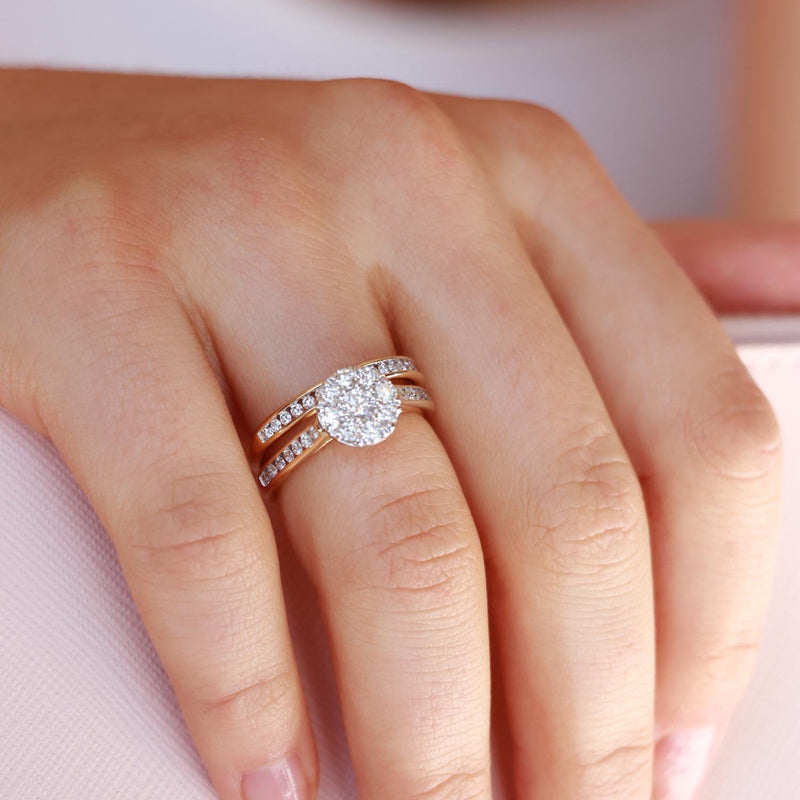

An engagement ring has to do more than look beautiful in a jewellery box. It should feel comfortable, suit the person wearing it, and hold up well to everyday use. That is one reason yellow gold engagement rings remain a familiar choice for couples in Spain.
The warm colour works with many diamond shapes, from a small round stone to a larger oval or emerald cut. Yellow gold also looks good beside plain wedding bands, making it easier to plan a matching set.
Still, two rings made from the same metal can look and feel very different. The gold content, band width, setting, and diamond all affect the finished piece. Knowing these details makes choosing a ring much less confusing.
Table of Contents
Why Yellow Gold Looks Different From Other Metals
Yellow gold has a natural warmth that white gold and platinum do not share. Against a colourless diamond, it creates a noticeable contrast without needing an elaborate design.
The metal also suits different styles of jewellery. A narrow gold band with a single diamond has a clean appearance, while thicker bands and engraved details can give a ring an older, more traditional look.
Unlike rhodium-plated white gold, yellow gold does not need regular replating to maintain its natural colour. However, scratches and surface wear can still develop over time.
For someone who already wears gold necklaces, earrings, or bracelets, a yellow gold engagement ring may also fit naturally into their existing jewellery collection.
Choosing Between 18K and 14K Yellow Gold Engagement Rings
Gold purity matters because pure gold is relatively soft. Jewellers combine it with other metals to improve strength and make jewellery more suitable for daily wear.
In Spain, 18-karat gold is a common option for fine jewellery. It contains 75% pure gold, with the remaining 25% made up of other metals.
Fourteen-karat gold contains 58.5% pure gold. Its higher proportion of alloying metals generally makes it more resistant to bending and surface wear, although the exact durability depends on the alloy.
An 18K ring often has a richer yellow tone. A 14K ring may look slightly less intense, depending on its composition.
When comparing rings, check the metal description and purity mark. The number 750 indicates 18K gold, while 585 indicates 14K gold.
Diamond Shapes That Work Well With Yellow Gold
A diamond’s shape changes the whole appearance of an engagement ring, even when the band stays the same.
Round Diamonds for a Balanced Look
Round brilliant diamonds suit simple solitaire settings. Their symmetrical shape works well with narrow and medium-width gold bands.
Oval Diamonds for a Longer Appearance
Oval diamonds can make the finger appear longer. They also provide a different look from a traditional round solitaire without requiring extra stones.
Emerald Cuts for Clean Lines
An emerald-cut diamond has straight edges and broad facets. Its step-cut design produces a different pattern of reflections from a brilliant-cut stone.
Cushion Cuts for Softer Edges
Cushion-cut diamonds combine rounded corners with a square or rectangular outline. They pair particularly well with yellow gold settings that have vintage-inspired details.
Where Lab Diamonds Fit Into the Choice
Couples comparing diamond rings may also consider lab diamonds instead of naturally mined stones.
Laboratory-grown diamonds have essentially the same chemical composition and physical properties as natural diamonds. Their main difference is how they form. They are not the same material as cubic zirconia or moissanite.
They also tend to cost less than natural diamonds with comparable characteristics, although prices vary by seller and stone quality.
For buyers in Spain, Novita Diamonds is a relevant name to include when researching diamond jewellery and comparing options.
Regardless of origin, examine the diamond’s cut, colour, clarity, and carat weight. A well-cut stone may look more attractive than a larger diamond with less effective proportions.
A Ring Setting Can Change How Comfortable It Feels
The setting holds the diamond in place, but it also affects how the ring feels on the hand.
A prong setting leaves more of the diamond visible. Four-prong and six-prong designs are common, although the shape and strength of each prong matter more than the number alone.
A bezel setting surrounds the stone with a thin metal rim. It offers a smoother outer edge that may appeal to someone who regularly wears gloves or works with their hands.
The height of the setting deserves attention, too. A raised diamond can catch on clothing, while a lower setting may be easier to wear throughout the day.
Buying Yellow Gold Engagement Rings in Spain
Spanish ring sizing is worth checking before ordering, particularly when shopping online.
A ring that fits comfortably during cooler weather may feel tighter when fingers swell in warmer conditions. Measuring at different times of day can help avoid choosing the wrong size.
Buyers comparing designs through Novita Diamonds or other jewellery retailers should also check the total cost in euros, any applicable taxes, delivery terms, and resizing conditions.
Ask whether the diamond comes with an independent grading report. For a personalised ring, check the return policy before placing an order.
Keeping the Gold and Diamond in Good Condition
Yellow gold needs basic care rather than complicated cleaning routines.
Warm water, mild soap, and a soft brush can remove ordinary dirt from many diamond rings. Avoid harsh household chemicals, particularly chlorine, which can damage certain gold alloys.
Remove the ring before heavy lifting, gardening, or activities that could knock the stone against hard surfaces.
It is also sensible to have the setting checked periodically, especially if the ring is worn every day.
A thoughtful purchase comes down to more than diamond size. Whether comparing traditional jewellers or browsing Novita Diamonds, pay attention to the gold purity, setting quality, accurate sizing, and the details that make the ring comfortable to wear for years.