
Table of Contents
Introduction
If you’ve ever gone down the rabbit hole of buying a diamond, you already know the alphabet soup is real. IGI, GIA, CVD, HPHT… it’s a lot. And when you add lab-grown stones to the mix? Even more confusing. So let’s chat about igi vs gia lab grown diamonds in a way that doesn’t feel like reading a gemology textbook. Just you, me, and the truth about why these little certificates can cause big debates.
Section 1: A Little Background (and a tiny story)
Think about the last time you tried to buy something meaningful—like a laptop, or, I don’t know, an air fryer everyone on TikTok wouldn’t shut up about. You probably spent more time comparing specs than actually deciding what you wanted. Diamonds are exactly the same. A lot of people assume all diamond grading labs are equal. Spoiler: they aren’t. Some are stricter, some are faster, some use slightly different language, and some have reputations that go up and down over the years. GIA, the Gemological Institute of America, is basically the “gold standard” everyone hears about. It’s like the Ivy League of grading labs—hard to argue with, very respected, very traditional. IGI, the International Gemological Institute, is more like that friend who’s smart, experienced, and actually modern enough to keep up with new diamond tech—especially lab-grown. For years, IGI dominated the lab-grown grading scene. To be fair, they kind of carried the industry on their back while everyone else was still pretending lab-grown diamonds were a “trend.”
But here’s where the plot twist comes in.
When people start comparing igi vs gia lab grown diamonds, they often come into the conversation assuming GIA is automatically superior. That’s not the full story. And honestly, sometimes it’s not even the part that matters most.
Section 2: Trends, Tips, and What Actually Matters (Let’s be honest… a lot of people get this wrong)
Let’s break this down, because there are a handful of things people think they should be looking at… and then the things that actually matter.
1. Consistency (aka: Do they grade fairly every time?)
- GIA tends to be conservative. Some say too conservative, especially with lab-grown diamonds.
- IGI tends to be consistent and predictable, which buyers and jewellers appreciate.
Consistency matters more than the name on the certificate. A predictable grading lab helps you compare apples to apples.
2. Reputation
- GIA is the historical heavyweight.
- IGI is the modern leader in lab-grown.
People forget that traditions don’t always evolve quickly. IGI adapted faster.
3. Pricing
Fun fact: the grading lab does not directly determine the diamond price. The market does. But the perception of a grading lab can influence what retailers charge.
For example:
- A GIA lab-grown diamond may be priced higher only because consumers associate GIA with prestige.
- An IGI lab-grown diamond might offer better visual quality for the same price.
4. Technology + Speed
IGI was the first major lab to embrace grading lab-grown diamonds seriously. Their reports were clearer, faster, and easier to understand.
GIA? They got there eventually, but slowly. Like “grandpa figuring out how TikTok works” slowly.
5. What your eyes actually see
I promise you—nobody at dinner is going to ask:
“Wow, is that graded by GIA or IGI?”
They’re going to say:
“That’s gorgeous.”
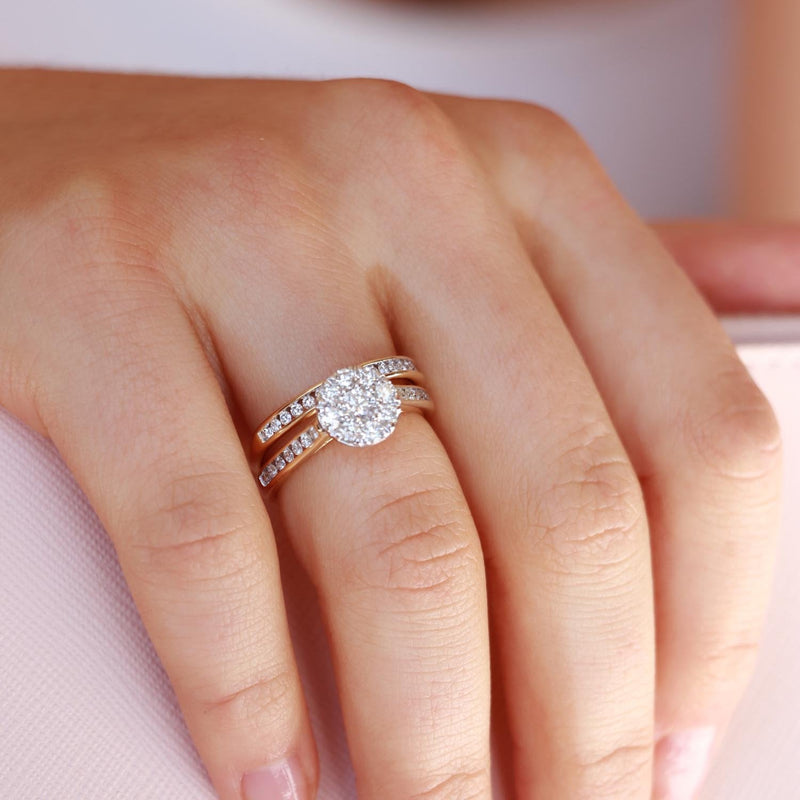
Because what matters more than igi vs gia lab grown diamonds is cut quality, sparkle, and how the stone actually looks on your hand.
Section 3: The Local Angle — Why It Matters Where You’re Shopping
Here’s something people rarely talk about: the grading lab you prefer sometimes depends on where you live and what the jewelers around you carry.
In Hong Kong? IGI lab-grown diamonds are everywhere. They dominate the market because they’re trusted, widely stocked, and recognized internationally.
In the U.S.? Bigger push for GIA branding because Americans love a prestige label.
In Singapore? A mix. Depends on the store and how modern their inventory is.
Every region has its buying culture. For example:
- Some local jewellers push GIA because their customers associate it with “best.”
- Others recommend IGI because the certificates are clearer, especially for non-native English speakers.
- Some simply carry IGI because the lab-grown supply chain is faster and more flexible.
It’s not that one is better universally—it’s that different markets have different expectations.
And honestly? Your local jeweler’s expertise might matter even more than the cert. A knowledgeable jeweler can show you why a VS1 graded by IGI sometimes looks indistinguishable from a VVS2 graded by GIA.
Section 4: How the Process Works (In normal-people language)
Okay, so let’s say you’re actually shopping for a lab-grown diamond. Here’s the not-too-formal version of how it usually goes:
Step 1: Browse a few stones online or in-store
You’ll see IGI grades more often. That’s normal. Don’t panic.
Step 2: Compare the sparkle in real life
Look at videos. Tilt the stone. See how it behaves in light.
Because let’s be honest—certificates don’t sparkle. Diamonds do.
Step 3: Look at the grading report
Here’s what you should check:
- Cut grade
- Clarity grade
- Colour
- Fluorescence
- CVD or HPHT origin
IGI reports tend to be more detailed for lab-grown specifics. GIA is catching up, but IGI still does the “consumer-friendly” thing better.
Step 4: Ask for real photos or loupe videos
Certs won’t show inclusions the way a real image will. Some inclusions look worse on paper but invisible in real life. That’s normal.
Step 5: Choose the one that visually wins
Nine times out of ten, you’ll choose the diamond that looks best—not the one that has the “fancier” grading lab name. And that’s okay. That’s smart, actually.
Conclusion
At the end of the day, the whole igi vs gia lab grown diamonds debate feels bigger online than it does in real life. Most people just want a beautiful stone that sparkles, feels meaningful, and doesn’t drain their bank account.
Both labs are reputable. Both are widely accepted. Both can give you a trustworthy grading report. But the diamond you choose? That’s about you—your story, your style, your moment.